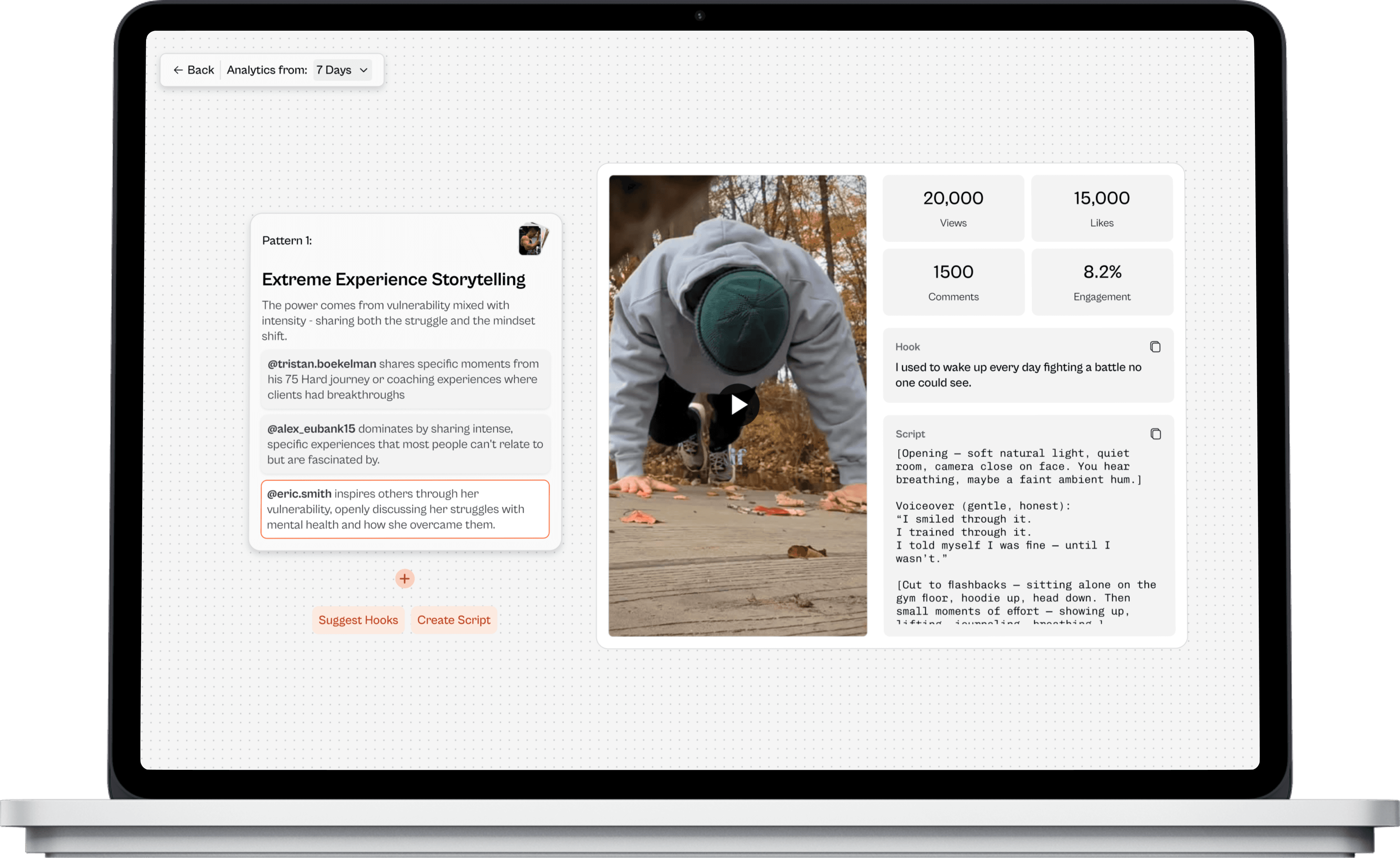
Introduction
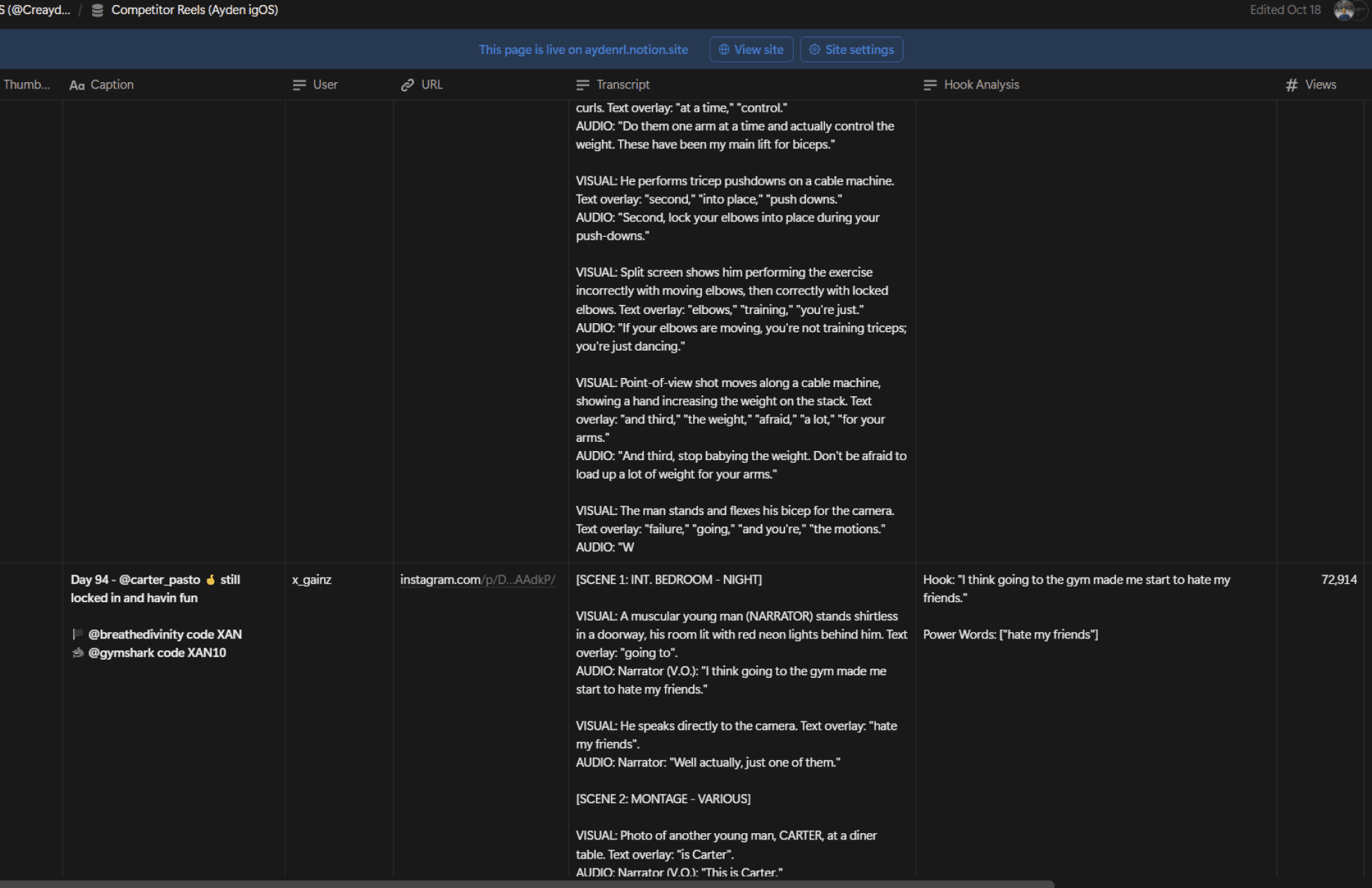
This project began with an existing backend system built by one of our teammates using n8n, which automated the process of scraping online videos, extracting transcripts and content type, and organizing it all into a Notion spreadsheet. While powerful, the system was overwhelming and unintuitive as data lived in silos and lacked actionable insights for creators.
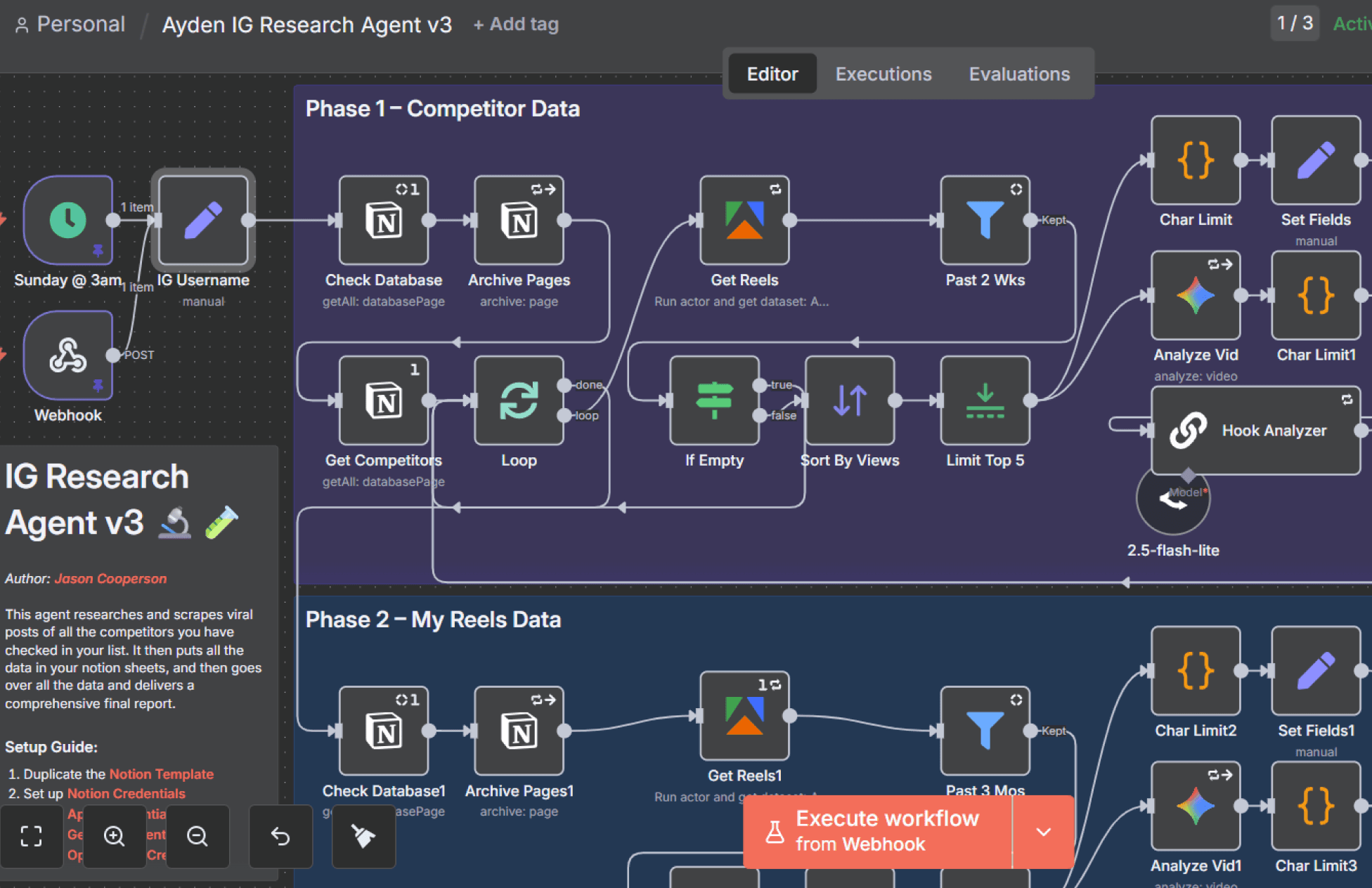
N8n backend scraps social content, extracted transcripts, tagged hooks, and sorted posts by views, automating manual research.
How can we improve this model?
Despite this, several creators paid to use the current tool, proving that there was real demand for automated content research. Our challenge was to evolve this model into a creator-friendly, intuitive web experience that preserved the powerful backend automation while displaying insights in a visual and flexible way. Our goal was to:
Automate content research for creators in a way that feels intuitive and iterative, freeing up time for the creative work that matters.
2. Problem & Key Question
Content creators are overwhelmed by the manual labor of staying relevant. From scrolling endlessly for inspiration to manually logging what’s trending, the research process eats up more time than actual content creation. Creators lose more time researching content than creating it, manually scrolling feeds and logging patterns with no system to act on insights.
How might we automate content research for creators in a way that feels intuitive and iterative, freeing up time for the creative work that matters.
Research Summary
Creators spend an average of 5–11 hours per week just on researching content (Facelift, 2025).
There is no centralized system for documenting trends, hook formats, or successful scripts.
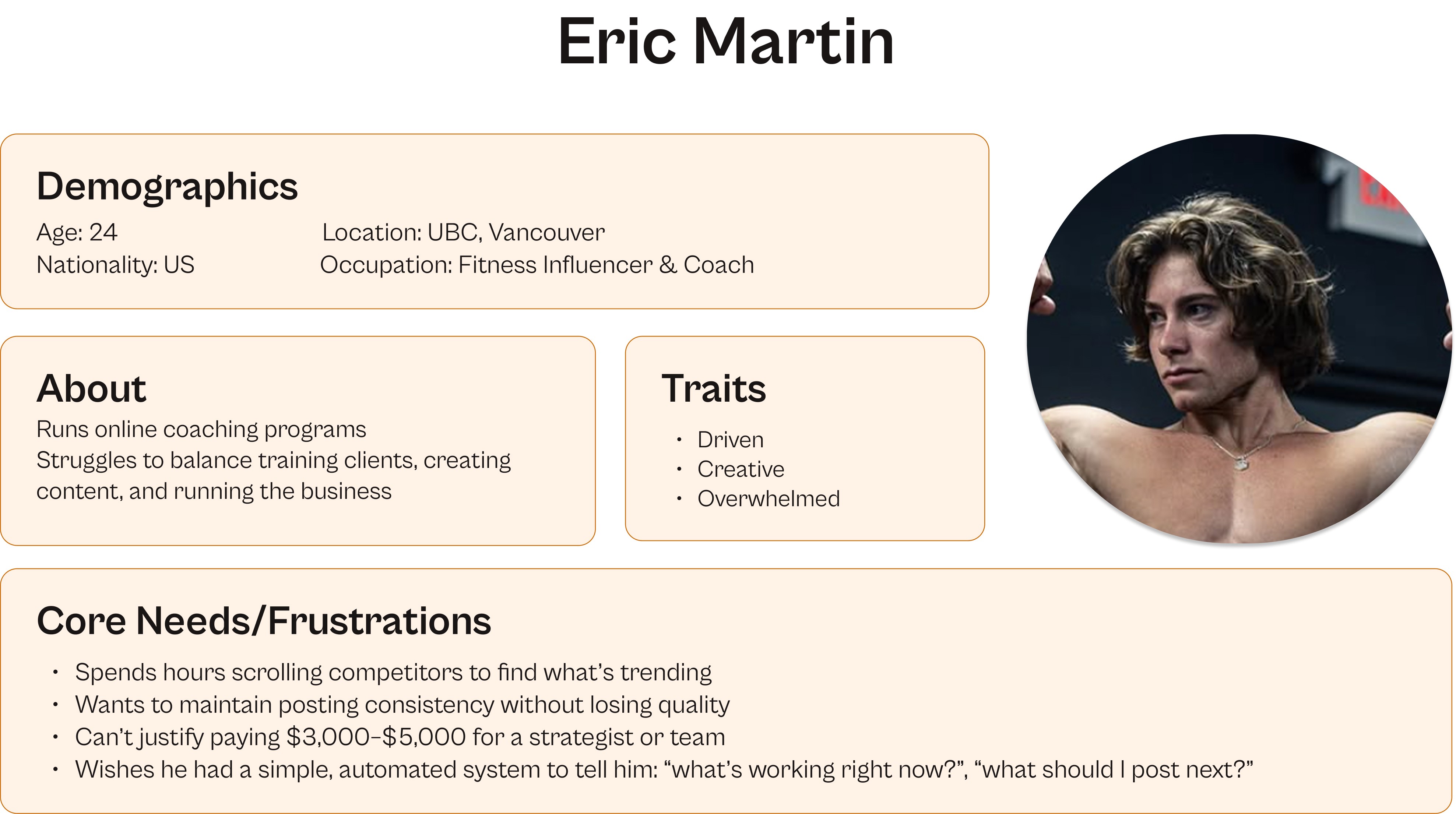
User Insights
User Journey
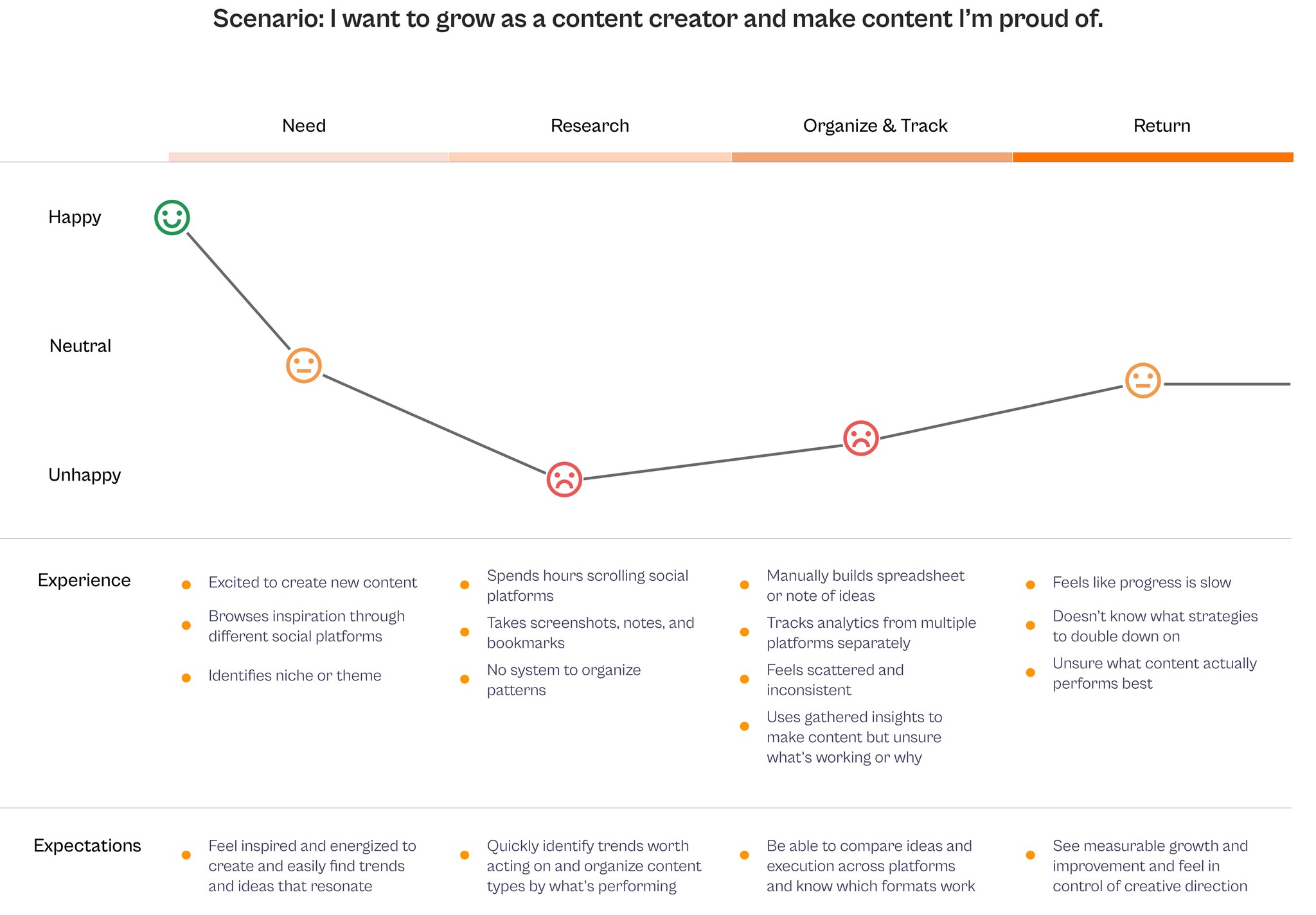
To better understand our user’s experience, we created a user journey map to identify key pain points. One of the most prominent challenges we uncovered was the mental exhaustion caused by navigating an overwhelming amount of scattered dementia-related information and resources.
5. Solution

Jelli
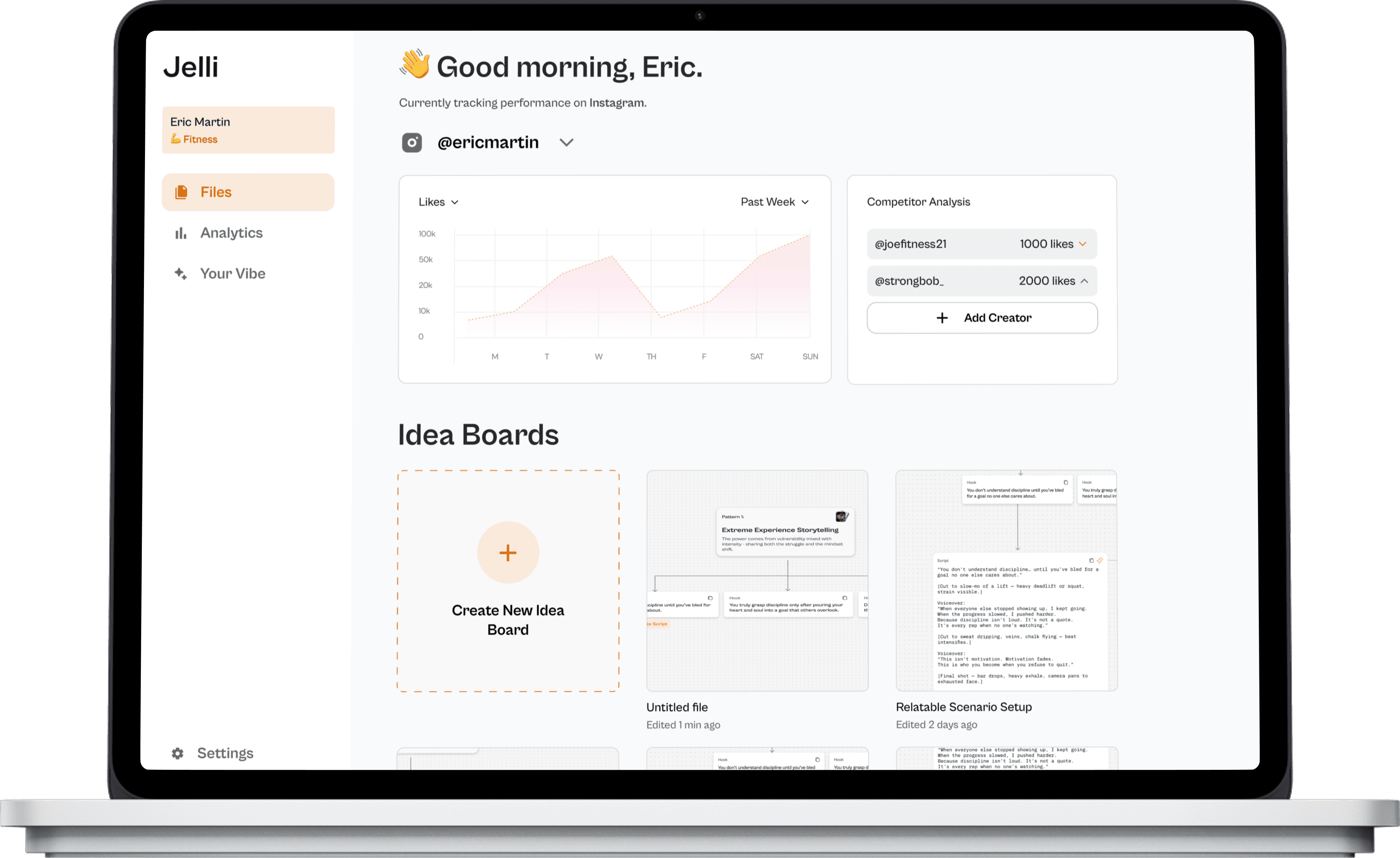
Jelli is a web-based tool designed to help content creators streamline their creative strategy by turning scattered research into actionable insights. It automates content discovery by analyzing top-performing posts across platforms, extracting patterns in hooks, formats, and scripts, and surfacing them in a visually organized workspace. By reducing the need for manual tracking and endless scrolling, Jelli gives creators back their time so they can focus more on crafting content, not researching it.
Process
We compared tools creators use today—from AI idea generators (Poppy AI) to custom n8n workflows—to see how well they support research, pattern-finding, and turning insights into content. We found that:
AI tools are great for fast inspiration, but don’t help creators organize, iterate, or connect ideas to performance.
Automation systems collect powerful data, but insights often live in spreadsheets that feel overwhelming and hard to act on.
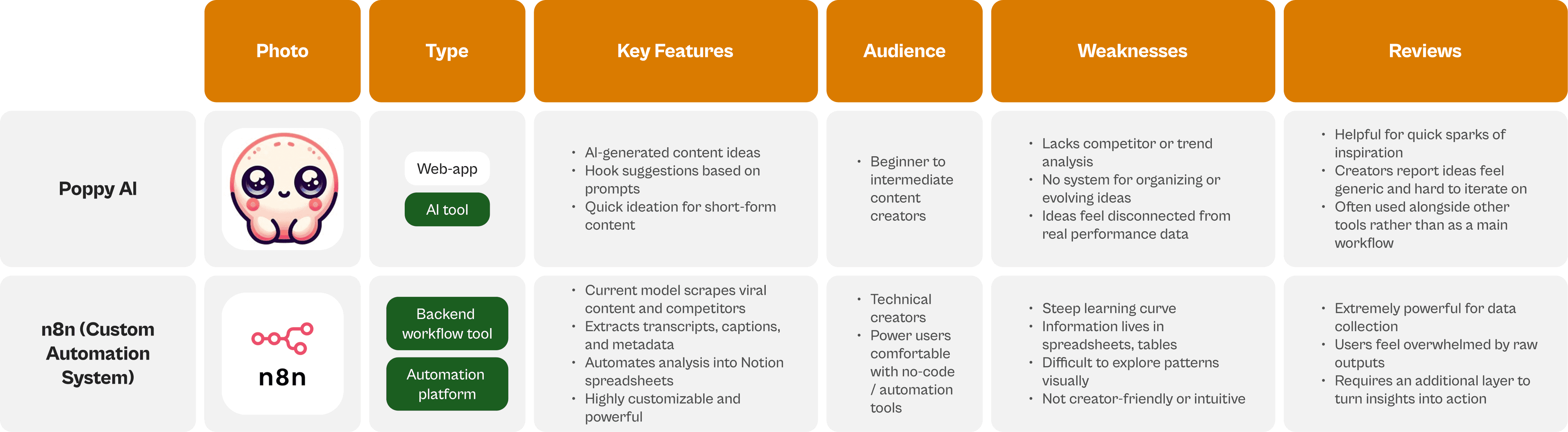
Creators are stuck between ideas without context and data without clarity. We then aimed to design a more visual, interactive workflow that turns scattered research into manageable patterns so that creators can move from scrolling, to insights, to content with more control.
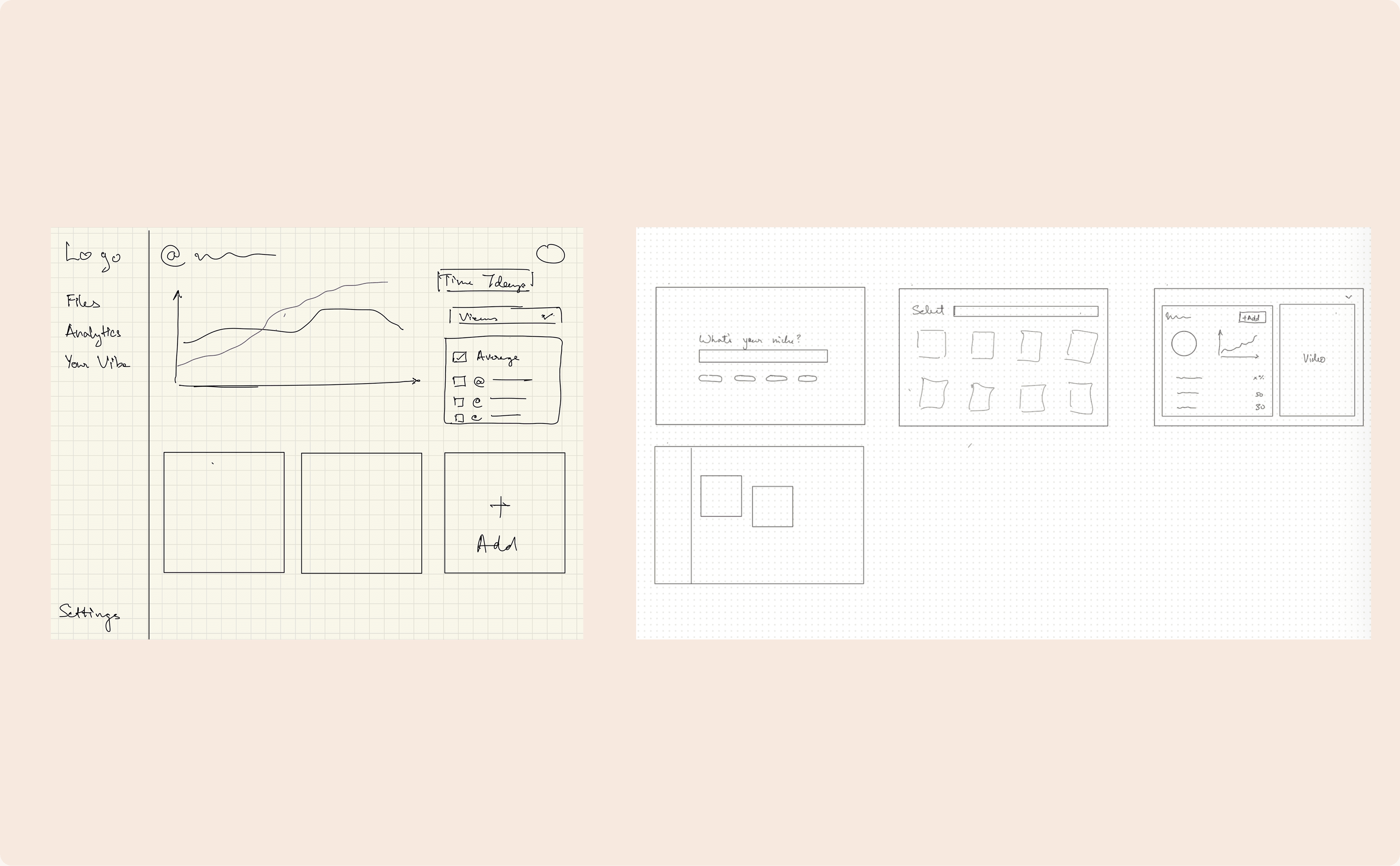
We started with low-fidelity wireframes to map out how creators would move from scattered inspiration to manageable, connected pattern without getting lost in tabs or spreadsheets. We took inspiration by tools like Miro and FigJam boards, where such workspaces create ideas that can branch, cluster, and evolve naturally.
Visuals and Branding
Logo

Title

Primary Colours
Secondary Colours
Gradients
Interactive Features
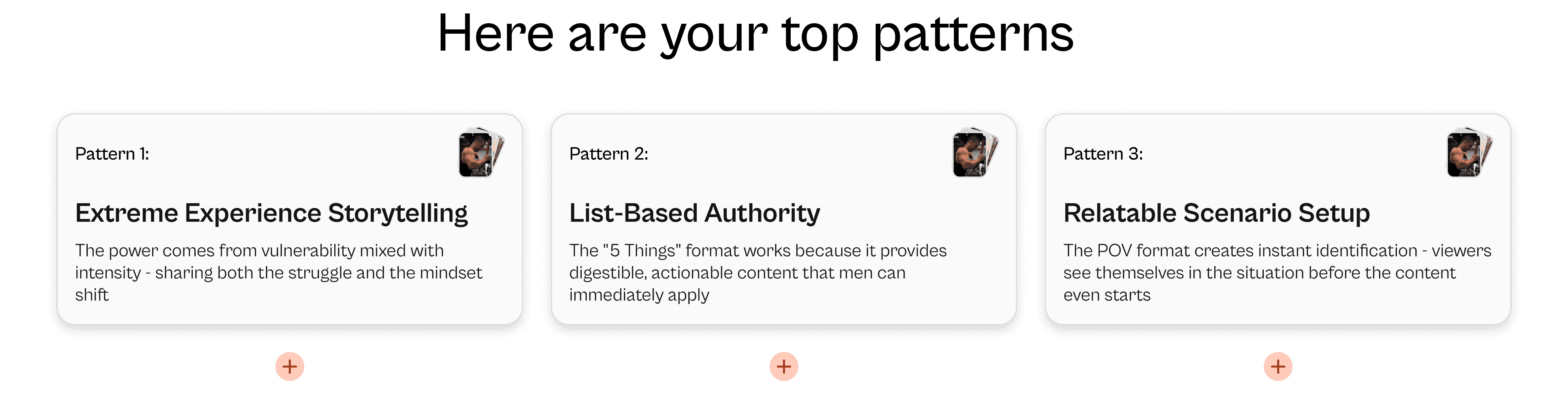
Pattern Selection
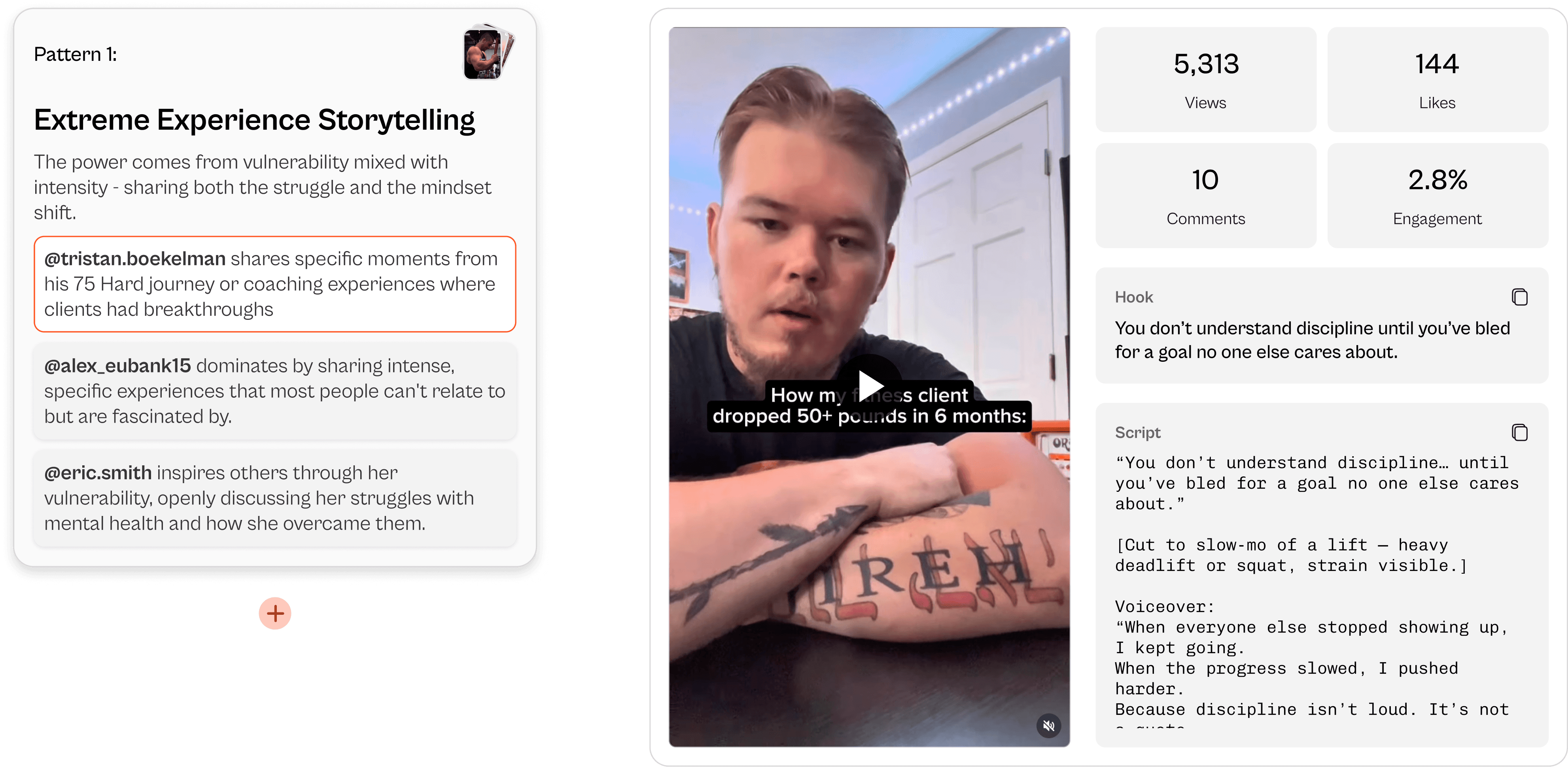
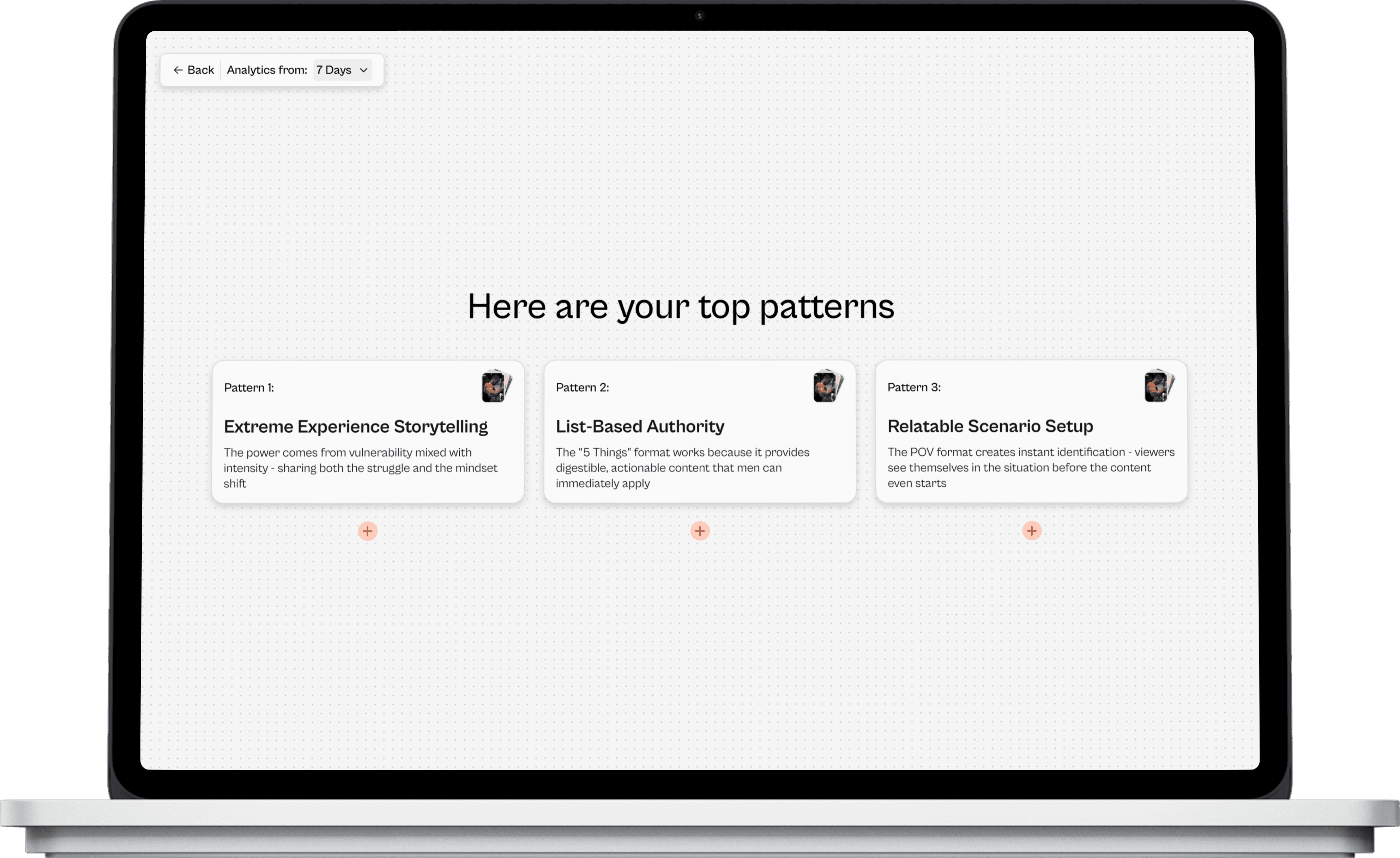
Top Patterns
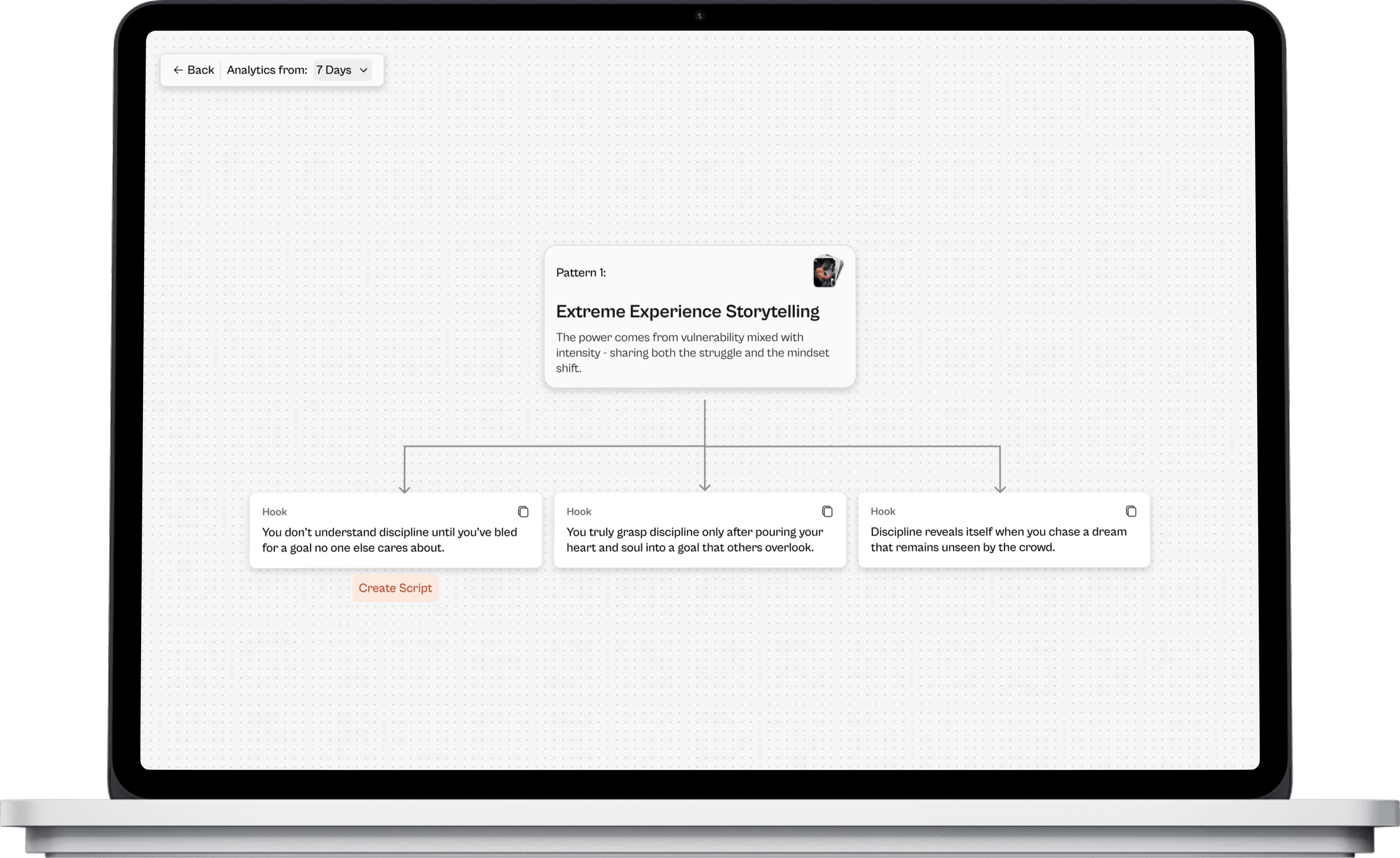
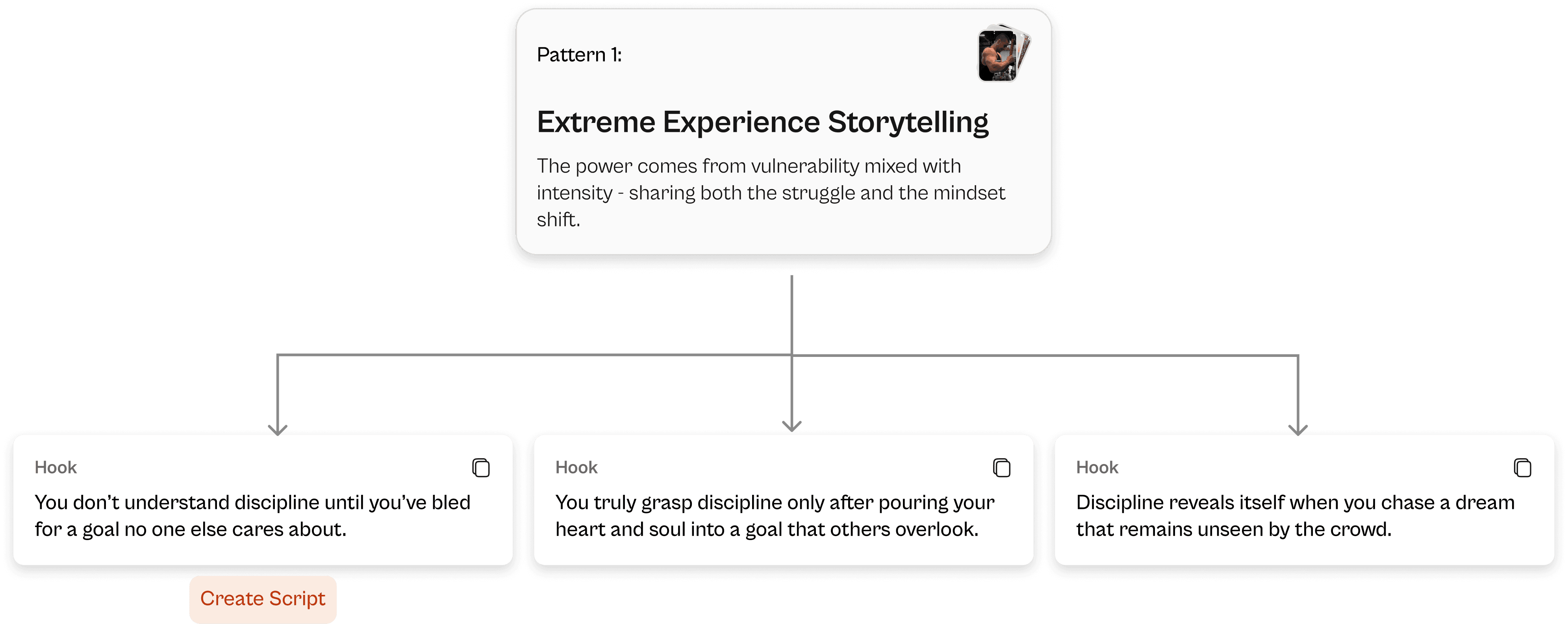
Pattern Branch Map
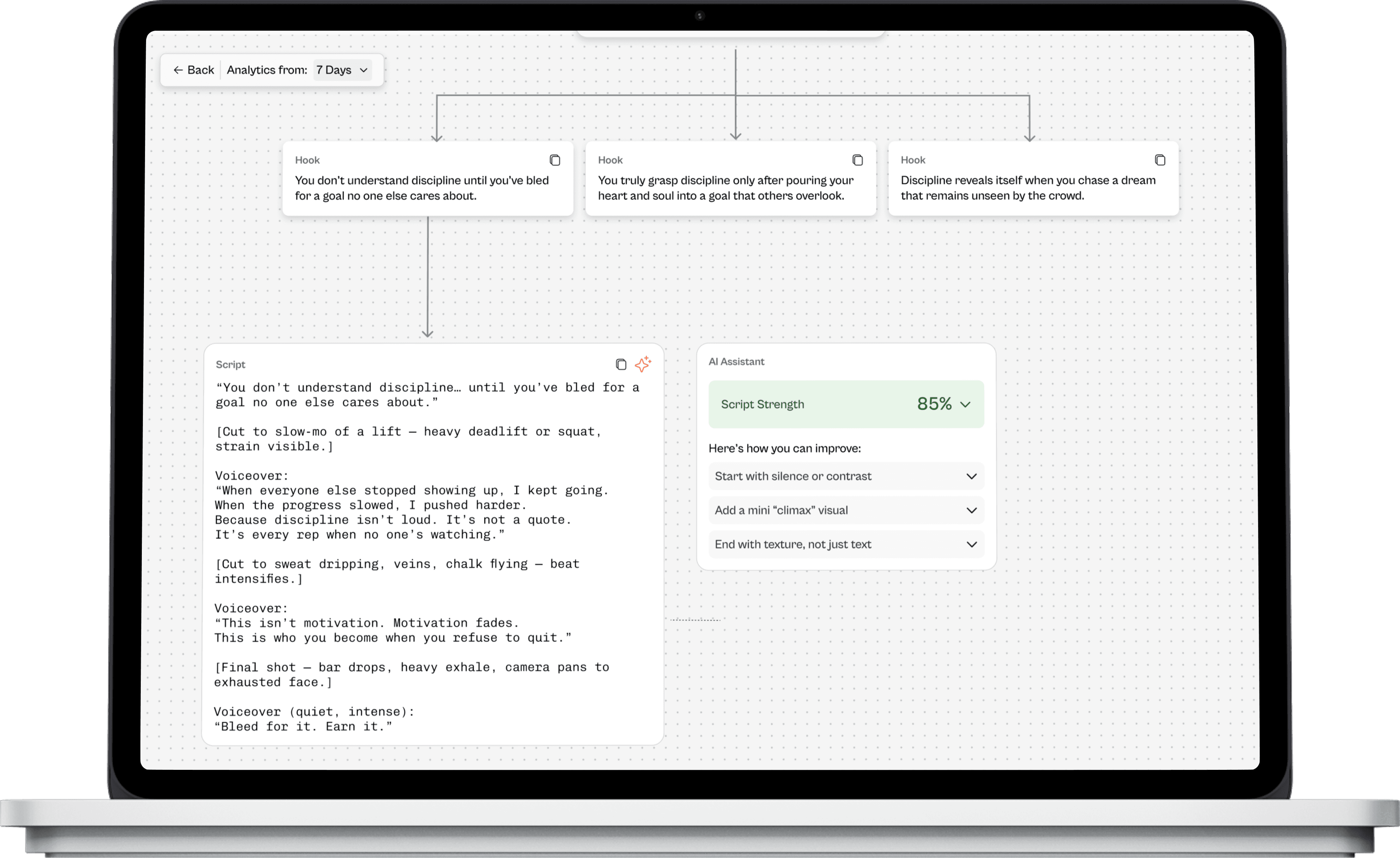
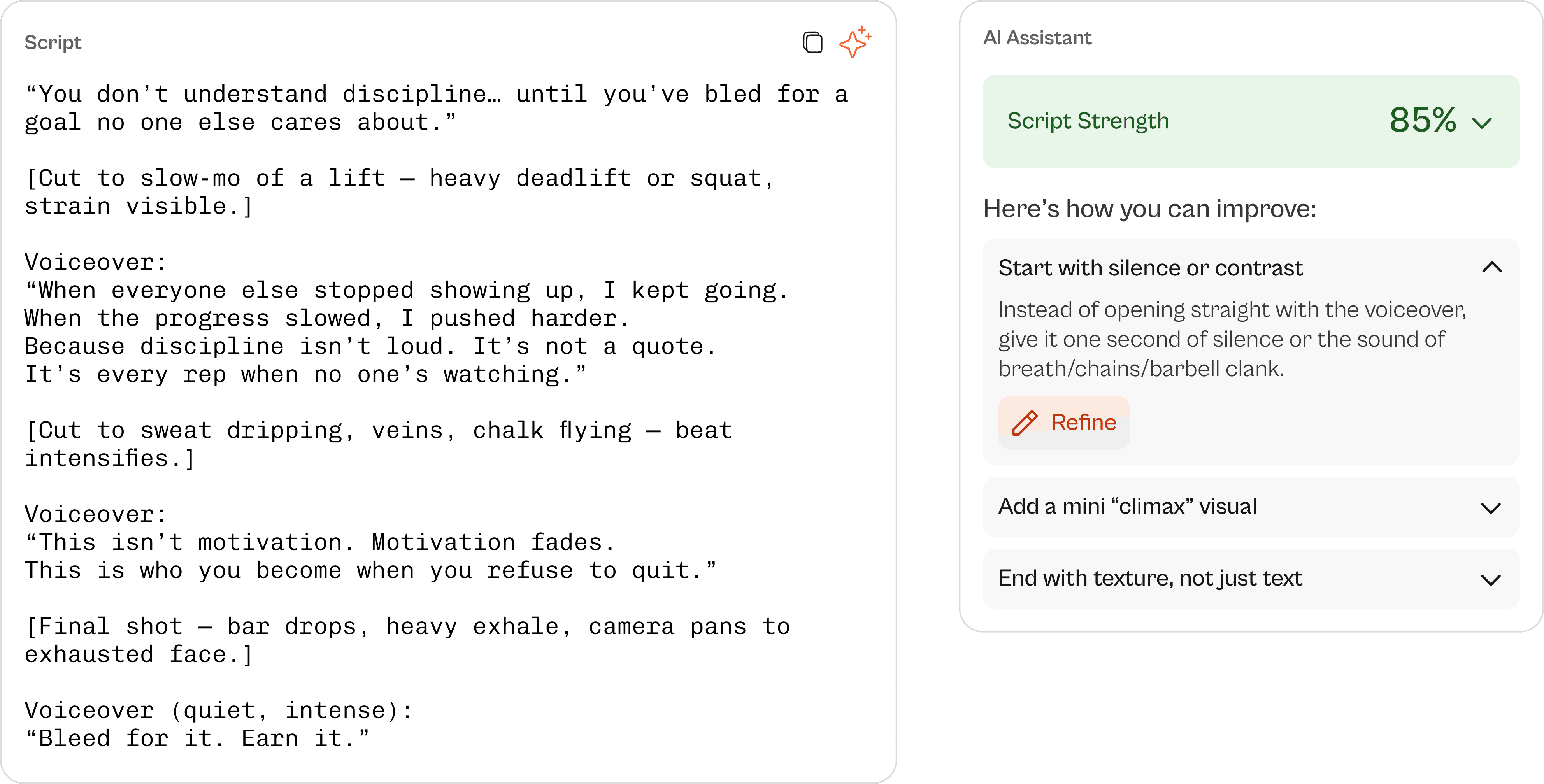
Script Writing and AI Writing Assistant
What I Learned
Turning Complexity into Clarity
One of our biggest wins was our attempt to transform a convoluted, manual workflow into something user-friendly.
Challenging Our Use of AI
We were pushed to think harder about how we integrated AI. Judges questioned the necessity of features like AI-generated script scores, urging us to evaluate whether they truly added value or were just novel.
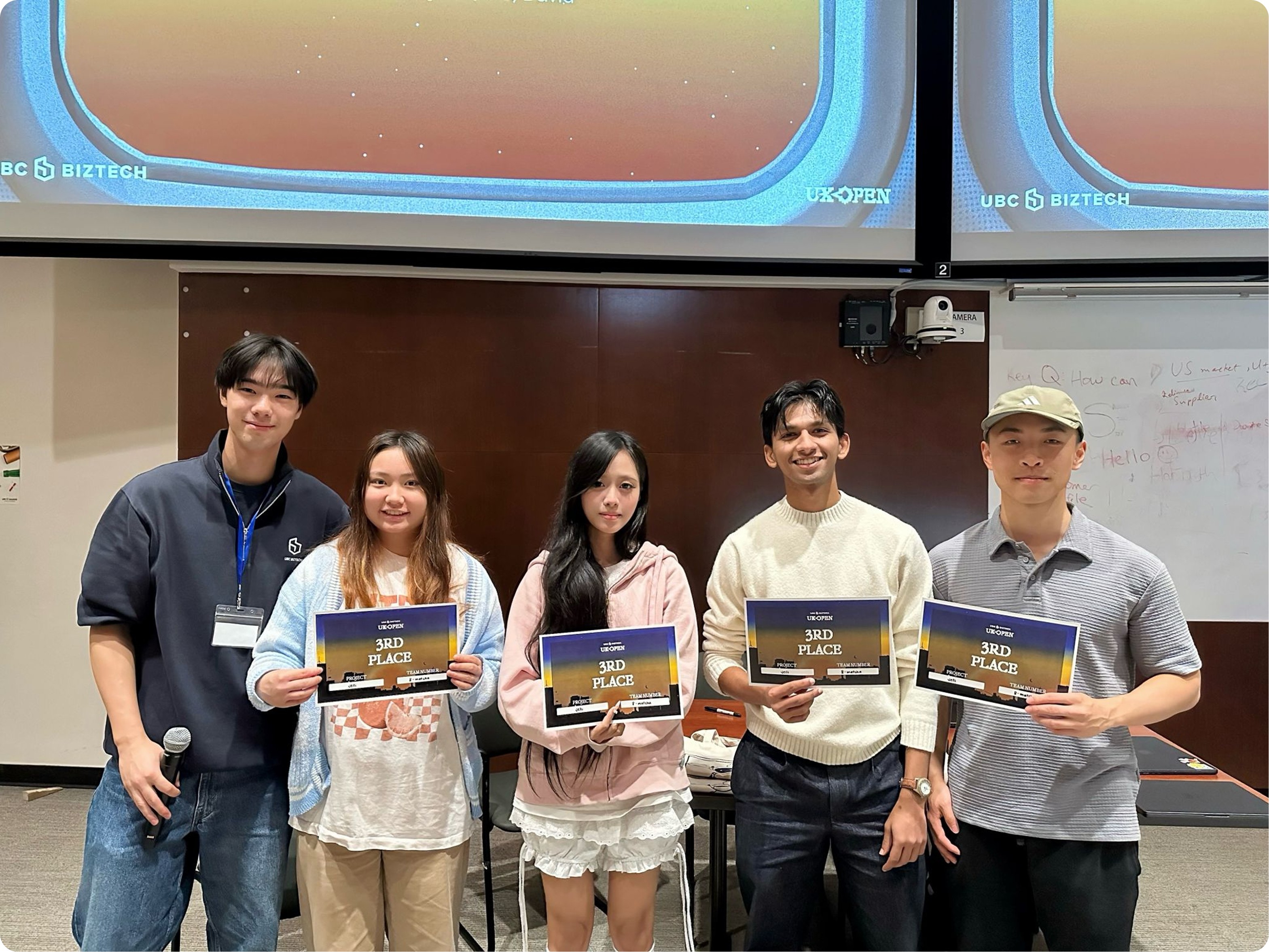
Placing 3rd overall and receiving the Best Business Plan award was a rewarding reminder that thoughtful design paired with real user needs can stand out. Despite the competitive field in this competition, our ability to solve a real pain point for creators and our communicating a sustainable business model helped us stand apart.
9. Acknowledgements
Endless thanks to my talented teammates for making this project such a collaborative and inspiring experience. I’m proud of what we built together. 🧡

From left to right: David (UX/UI Designer), Me (UX/UI Designer), Ayden (Product Manager), and Iris (Product Manager)
Check out my other work!
Folktale Friends
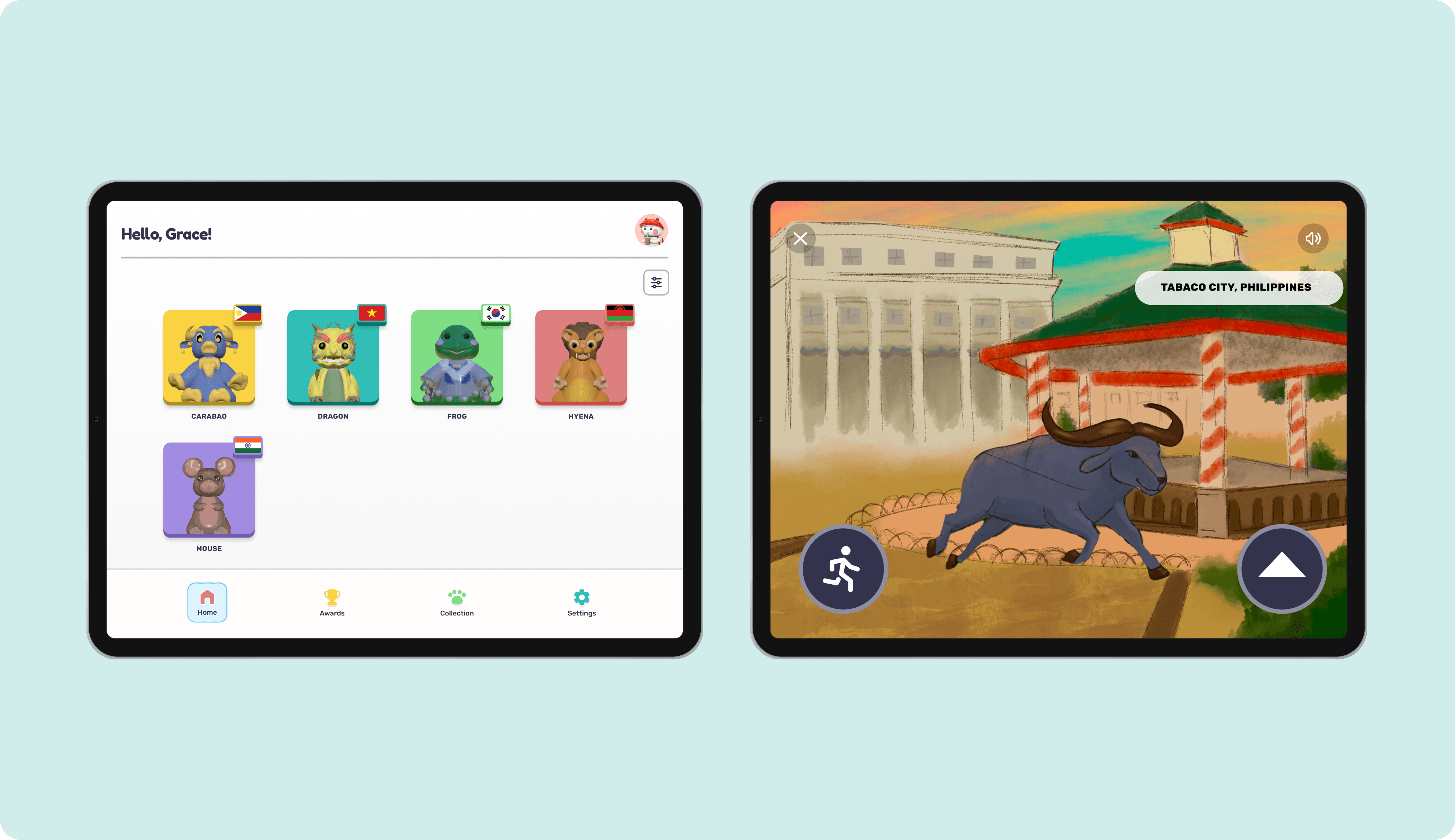
A blended toy-and-app experience fostering cultural education and imaginative play for children.
🔍 Case Study
📱 Mobile App